
Views: 0 Author: Site Editor Publish Time: 2026-10-19 Origin: Site
A car that shudders at idle, clunks when you shift into gear, or sends a vibration up through the steering wheel is rarely suffering from something exotic. More often than not, the culprit is a worn mount — the small rubber-and-metal component responsible for holding the engine steady while absorbing the vibration it naturally produces. When that part finally gives out, the fix is usually more straightforward (and more affordable) than drivers expect.
This guide walks through why mounts fail, how to recognize the warning signs, and what the repair process actually looks like. Along the way, you'll find a quick reference table comparing symptoms by severity, along with some notes on how parts quality affects long-term reliability. Whether you're a daily commuter trying to diagnose a strange noise or a shop owner sourcing replacement parts in bulk, understanding this system will save you time, money, and a few unnecessary trips to the mechanic.
Every engine mount is built from a combination of steel brackets and molded rubber (or, in some designs, hydraulic fluid chambers). That rubber core is what cushions the engine against road shock, torque, and the constant micro-vibrations produced by combustion. Over years of heat cycling, oil exposure, and mechanical stress, the rubber hardens, cracks, or separates from its metal housing.
Once that happens, the engine is no longer properly isolated from the chassis. Vibration transfers directly into the cabin, and in more advanced cases, the engine can physically shift position under acceleration or braking. Heat is one of the biggest accelerants here — mounts located near the exhaust manifold or turbocharger tend to degrade faster than those positioned elsewhere in the bay.
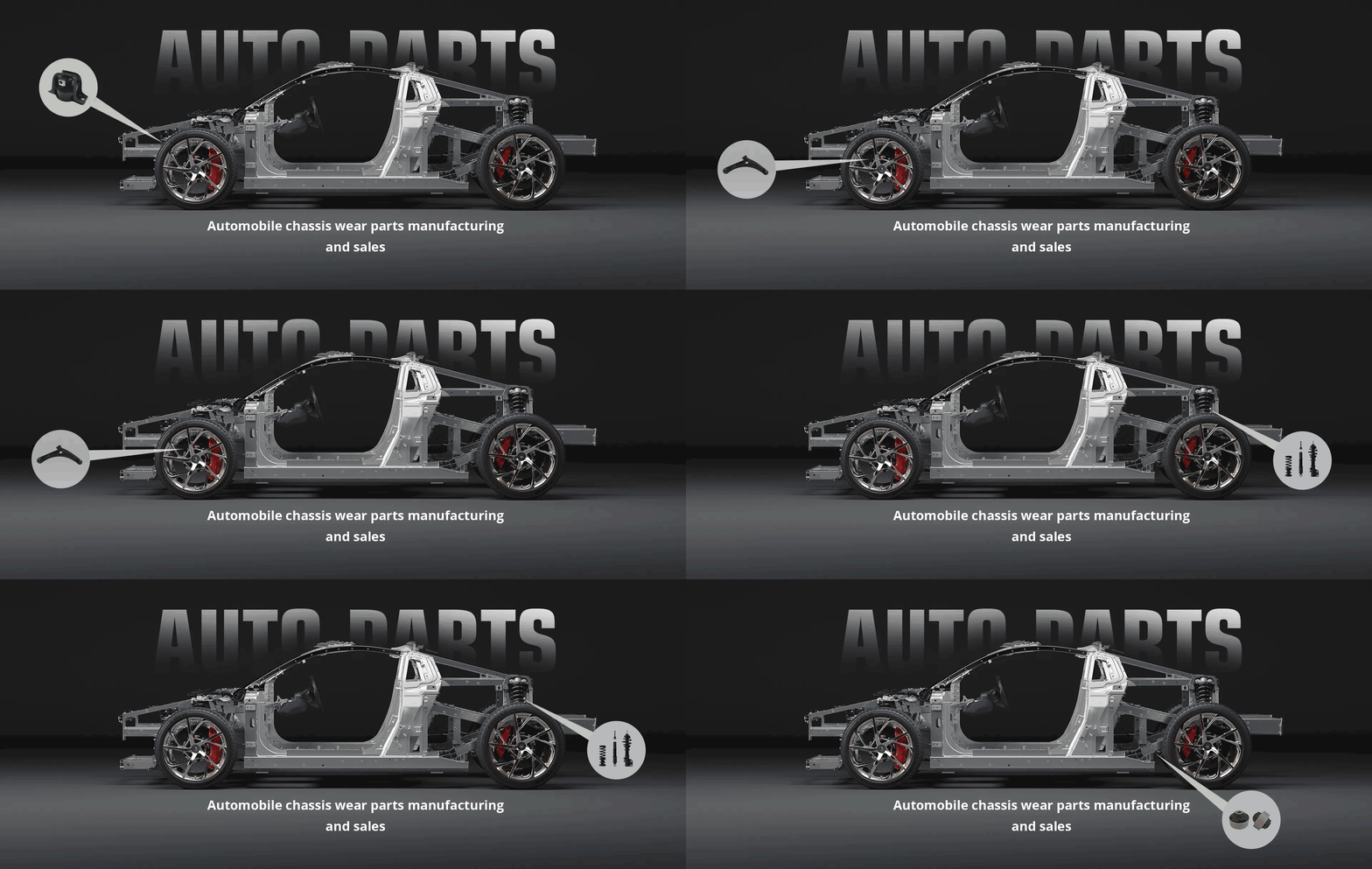
Most drivers don't think about replacing an engine mount until the symptoms become impossible to ignore. The early signs, though, are often subtle enough to dismiss as "just an old car" quirks:
A noticeable clunk or thud when shifting from park to drive, or from reverse into drive
Increased vibration at idle, especially felt through the seat or steering wheel
A knocking sound during acceleration or hard braking
Visible engine movement when the hood is open and the accelerator is lightly pressed
Uneven engine idle or a rougher-than-normal start-up
None of these symptoms alone confirms a failed mount — worn CV joints, bad spark plugs, or loose exhaust hardware can mimic similar sensations. But when several of these signs show up together, it's a strong indicator that at least one mount has reached the end of its service life.
The number and position of mounts varies by vehicle layout, but most passenger cars use between three and four. Transverse-mounted engines (common in front-wheel-drive vehicles) typically rely on a right-side mount, a left-side (or transmission) mount, and a rear torque-strut mount to prevent rotational movement during acceleration. Longitudinal engine layouts, often found in rear-wheel-drive and all-wheel-drive platforms, tend to use two main mounts positioned directly beneath the engine block.
Knowing the exact engine mounting location for your specific make and model matters because a technician diagnosing a vibration complaint needs to isolate which mount is actually failing — replacing the wrong one wastes labor and parts without solving the underlying issue.
Symptom | Likely Severity | Recommended Action |
|---|---|---|
Mild vibration at idle | Low | Monitor; schedule inspection within a few weeks |
Clunk on gear shift | Moderate | Inspect mounts and bushings soon |
Visible engine shift under acceleration | High | Replace affected mount promptly |
Persistent knocking during braking | High | Replace immediately; check for secondary damage |
Rattling exhaust or heat shield noise | Low to Moderate | Confirm whether mount or exhaust hanger is the cause |
This table is meant as a general reference rather than a diagnostic guarantee — a trained technician should always confirm the source of noise or vibration before ordering parts.
The repair itself is mechanically simple, even if it requires some patience. A typical engine mount change involves supporting the engine with a jack or support bar, removing the bolts securing the old mount to both the engine block and the chassis, and installing the replacement before releasing the support. Depending on the mount's position, this can take anywhere from thirty minutes to a couple of hours per side.
The bigger variable isn't labor — it's part quality. A mount manufactured with inconsistent rubber compounding or mismatched steel tolerances may fail again within a year or two, even if the installation was done correctly. This is where sourcing matters as much as the repair process itself.
Kaiping Huilong Auto Parts Factory, the manufacturer behind the Condragon brand, has spent over a decade focused specifically on chassis components like engine mounts, strut mounts, bushings, and suspension parts. Every mount is developed as a 1:1 match to the original equipment design, built using natural rubber rather than cheaper synthetic blends, and backed by ISO9001-certified manufacturing processes across a 10,000-square-meter facility in Guangdong, China.
That level of consistency matters because a mount isn't a part you want to replace twice. Original-module tooling and tested rubber properties translate into a component that holds up against the same heat, torque, and vibration cycles that wore out the factory original — without introducing the premature failures common in low-cost, poorly toleranced aftermarket parts.
For distributors and repair shops sourcing in volume, that reliability compounds: fewer warranty claims, fewer comebacks, and a reputation built on parts that actually last.
If vibration, clunking, or visible engine movement has shown up in your own vehicle, the smartest next step is confirming which mount has failed before ordering a replacement. A quick inspection — either your own or through a trusted shop — will tell you whether one mount or several need attention. From there, choosing a component built to original specifications, rather than a generic low-cost substitute, is what determines whether this repair lasts five years or fifty thousand kilometers.
A well-sourced mount, installed correctly, should restore the smooth, quiet ride you expect from a properly running engine — and keep it that way for years to come.
How long does an engine mount typically last?
Most mounts last between 80,000 and 160,000 kilometers, though heat exposure, driving style, and part quality all affect this range significantly.
Can I drive with a broken engine mount?
Short distances at low speed are usually survivable, but a failed mount puts extra strain on the transmission, exhaust system, and other mounts, so prolonged driving isn't recommended.
Do all engine mounts need to be replaced at the same time?
Not necessarily. Mounts can fail independently, so it's common to replace just one or two rather than the full set, provided the others test as structurally sound.
Is it worth paying more for OEM-matched replacement parts?
In most cases, yes. Mounts built to original tolerances and rubber specifications tend to outlast generic alternatives, reducing the likelihood of repeat repairs.


