
Views: 0 Author: Site Editor Publish Time: 2026-08-04 Origin: Site
TL;DR:
Engine mounts typically last 60,000–100,000 miles but can fail earlier due to oil exposure, heavy loads, or aggressive driving. Key warning signs include excessive vibration, clunking noises, and visible rubber cracking. Replacement costs range from $200 to $600 per mount, including labor. Catching failure early prevents far more expensive secondary damage.
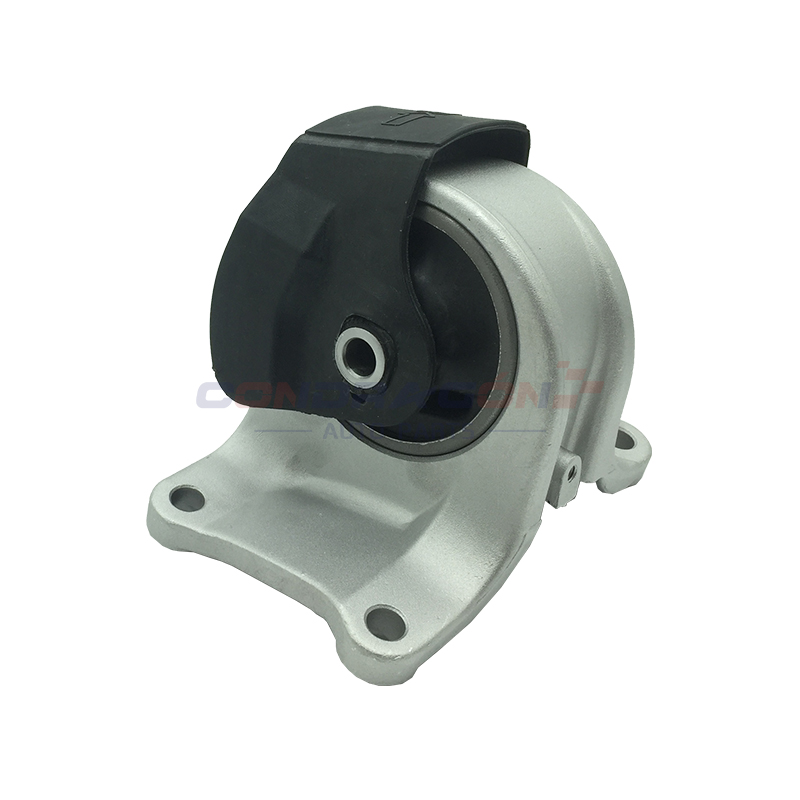
Most drivers don't think about engine mounts until something goes wrong. That's understandable — they're tucked out of sight, doing their job quietly. But these small rubber-and-steel components carry enormous responsibility. They hold the engine in place, absorb combustion vibrations, and prevent those forces from reaching the cabin, chassis, and surrounding components.


When an engine mount broken beyond its usable life goes unaddressed, the consequences ripple outward fast. CV axles flex at wrong angles. Exhaust pipes crack from excess movement. In severe cases, steering precision degrades. A part that costs relatively little to replace early can trigger repair bills that are many times higher if ignored.
This guide covers everything you need to know — from how to spot early failure signs to replacement timing and what to look for in a quality replacement part.
An engine mount connects the engine (and often the transmission) to the vehicle's chassis. Most passenger vehicles use two to four mounts. Each one serves a dual purpose: structural support and vibration isolation.
The structural role keeps the engine from shifting during acceleration, braking, and cornering. The isolation role — handled by a bonded rubber insert — absorbs the constant vibrations generated by combustion. Without that rubber buffer, every idle pulse and gear change would travel directly into the cabin.
Over time, rubber degrades. Heat cycles, oil contamination, and mechanical stress all break down the material. Once elasticity is lost, the mount can no longer absorb movement effectively. That's when drivers start to notice symptoms.

Early detection makes a significant difference in total repair cost. The signs below are worth knowing — not every symptom appears all at once, and some are subtle enough to be dismissed as normal vehicle aging.
Warning Sign | What It Indicates | Urgency Level |
|---|---|---|
Excessive vibration at idle | Mount no longer absorbing engine pulses | Moderate |
Clunking or thudding when shifting gears | Engine shifting position under load | High |
Engine visually moving in the bay | Structural integrity compromised | Immediate |
Steering wheel vibration at low speed | Vibration transferring to chassis | Moderate |
Cracked or deteriorated rubber (visible) | Material degradation, mount near end of life | Schedule soon |
Increased cabin noise during acceleration | Loss of isolation between engine and body | Moderate |
Exhaust rattles or contact noises | Engine shifting enough to stress nearby components | High |
If you're experiencing two or more of these symptoms together, the mounts should be inspected without delay. A mechanic can perform a visual check and a simple load test to confirm which mount has failed.
Cost is one of the first questions drivers ask, and the range is wide. A realistic engine mount cost estimate depends on three variables: the vehicle make and model, the quality of the replacement part, and local labor rates.
Parts alone can run from $20 to $200 per mount. Labor adds another $150 to $350 per mount, depending on accessibility — some mounts require partial engine removal to reach. On most passenger vehicles, total replacement cost per mount falls between $200 and $600. Replacing multiple mounts at once reduces overall labor time and is often recommended when one has failed and others are near the same mileage.
Choosing a quality part upfront matters more than most drivers realize. Cheap mounts made with inferior rubber compounds lose their damping properties faster, sometimes within 20,000 miles. That means paying for labor again sooner than expected.
Condragon Auto Parts, manufactured by Kaiping Huilong Auto Parts Factory (ISO9001 certified), produces engine mounts using 100% natural rubber developed 1:1 against original part specifications. Each mount undergoes rubber stability testing and carries a 60,000 km warranty. For buyers sourcing parts directly — fleet managers, workshops, or distributors — Condragon offers competitive pricing without compromising on material quality. The factory covers an area of 10,000 square meters and supports a broad range of vehicle applications, including Nissan and Renault models.
Mileage alone isn't a reliable guide. A mount on a vehicle driven mostly on smooth highways may last 100,000 miles. The same mount on a vehicle used for towing, off-road driving, or city stop-and-go traffic may fail at 50,000 miles. Several factors accelerate wear:
Oil contamination: Leaking engine oil degrades rubber compounds significantly faster
Extreme temperatures: Repeated heat cycles harden and crack rubber over time
Heavy loads or towing: Constant high-torque stress accelerates structural fatigue
Aggressive driving: Hard acceleration and braking cycles increase dynamic load on mounts
A practical rule: inspect mounts visually at every 30,000-mile service interval, or any time unusual vibration or noise appears. If the rubber shows cracking, separation from the metal bracket, or compression beyond its original height, replacement is due. Understanding when to replace engine mounts early — before complete failure — prevents the collateral damage that makes this repair significantly more expensive.
Driving with a failed mount rarely ends with just replacing the mount. Engine movement under load puts stress on the exhaust manifold, CV axles, transmission linkages, and coolant hoses. Any of these components can develop secondary damage within a few thousand miles of running with a compromised mount.
In worst-case scenarios, a completely failed mount allows the engine to contact the chassis or firewall during hard acceleration. At that point, the repair scope expands considerably.
The calculus is straightforward: a $250–$500 replacement done at the right time prevents $1,000–$3,000 in cascading repairs. Getting the right part — one built to original specifications with tested rubber properties — is the other half of the equation.
How long do engine mounts typically last?
Most engine mounts last between 60,000 and 100,000 miles under normal driving conditions. Vehicles used for towing, off-road driving, or frequent stop-and-go traffic may see mounts fail earlier.
Can I drive with a failed engine mount?
Short distances may be possible, but it's not advisable. A failed mount allows the engine to shift, which stresses surrounding components including exhaust pipes, CV axles, and transmission linkages. Continued driving with a broken mount accelerates secondary damage.
Should I replace all engine mounts at once?
Not always required, but often practical. If one mount has failed due to age or high mileage, others are likely near the same point in their service life. Replacing them together reduces total labor cost and prevents a second repair visit within a short period.
How do I know if a replacement mount is high quality?
Look for mounts built to OEM specifications using natural rubber, with documented testing for rubber stability and load performance. ISO9001-certified manufacturers, like Condragon Auto Parts, follow internationally recognized quality standards that ensure consistent part performance.
What's the difference between an engine mount and a transmission mount?
Engine mounts secure the engine block to the chassis. Transmission mounts do the same for the gearbox. Both use similar rubber-bonded designs and can develop similar symptoms when they fail. A mechanic can identify which specific mount is responsible during inspection.


